A Conversation with the Ocean
What waves tell us: the lines, the ocean hopes we learn to ride.
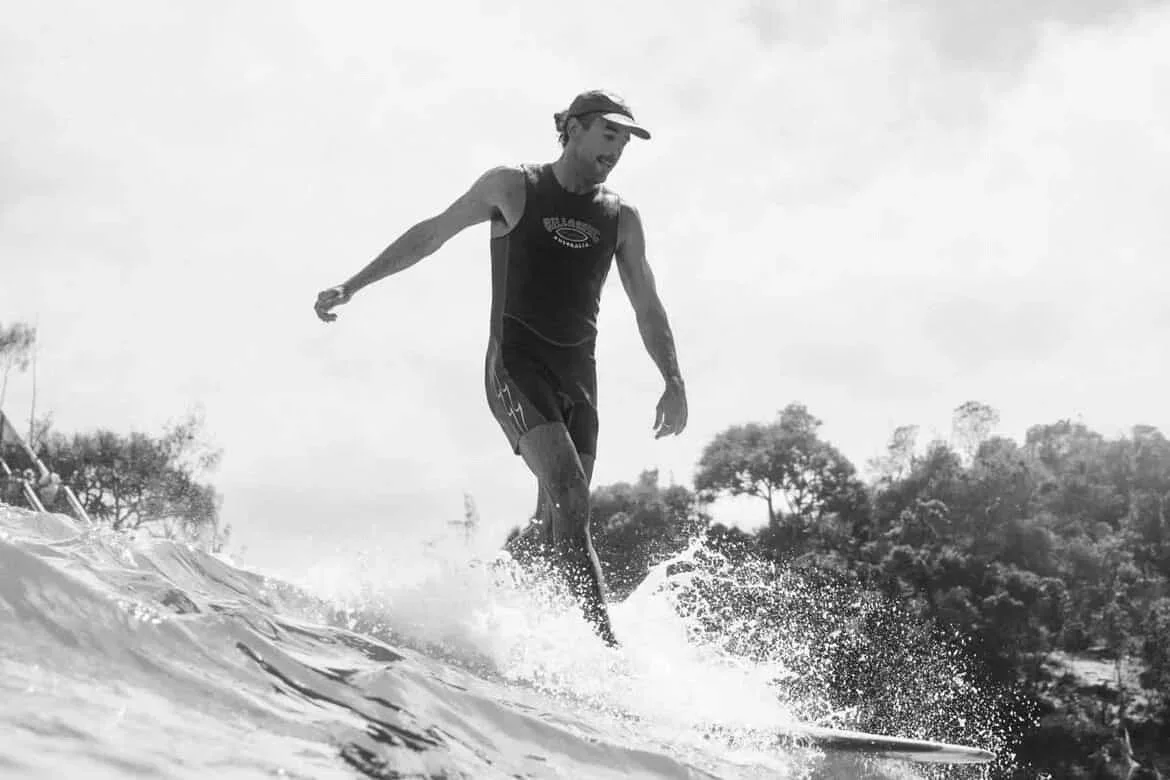
Surfer Featured: Carles Casanova (Instagram @carlescasanova1)
Life demands the same reverence as the salt-kissed, crescent peaks we surfers adore. Yet on land, we resist what the ocean’s waves teach us so effortlessly. On water, we honour dissolving; on concrete, we worship resistance.
It is ironic. Dissolving on solid ground, surrendering fully to the experiences of our lives feels like defeat. As if yielding to the greater, eternal nature we are guests of is a consequence of human misuse. As if we were doing something wrong, simply by not being in control. Yet out on the liquid lines, we invest the entirety of our being, understanding what is required of us as surfers, to know surfing, ourselves, and life beyond articulation.
With each intentional paddle, each slow-motion pop-up, each soaring fall into the pit, surfers are reminded that we are here to experience existence—to allow it to flow through us without the mind reaching out to measure it against desire or self-imposed authority.
As a new day dawns for every ocean-worshipping board rider, the alarms cease their song, the prelude to a forever-new today. Coffee brews; boards and bikinis awaken from the slumber of the moon’s telling. Surfers immerse themselves in unseen possibilities as they make their way to the shores that sustain their lives.
Ignitions quiet, zinc is smeared, and hearts sing the truth of life we read within the lines the ocean teaches us to ride. We hear the language the A-frame peaks whisper from the car park. Fellow riders pull up, packed like sardines in a tin, all following the same ritualistic routine.
Our landlocked structure meets the shore, and our toes press into the wet edge where dry and wet sand merge. Here, when non-existence offers itself as a lifeline, an impulse rises in every surfer: to keep the mind present, to control the drifting movements of the session, urging us forward, backward, anywhere but here, rather than letting it all go.
Whether in the surf line-up or the café queue, we all carry with us catalogues of what has been, stored alongside drafts of what could’ve been and what could still be. What made the past? What will shape tomorrow? The landscape around us, four walls or four-foot barrels, does not determine the absence or presence of our yearning to push life into stories we can control. Past, present, future: the yearning originates within the sphere of ourselves. What we hold in the mind follows the self into every doorway of experience we inhabit. The beauty of a surfer’s flow lies in moments that exist beyond time, entered with each ride and each meeting of rider and wave. These moments remind us that the mind can never remain in pure presence. It is within this timeless space that the surfer lives.
As a surfer surveys the horizon, the birth of the sun marks more than a simple sunrise. It awakens the truth of change within our memory. Life’s oxygen is impermanence. Today is neither yesterday nor tomorrow.
It is in that instant, when the ocean becomes the undeniable creator of form, the clear force in control, that we are given a choice: to merge or remain separate, to dissolve and vanish like salt in the sea or to linger like oil on its surface.
We are presented, though only obliquely, with a choice: to reach toward our own individualism, clutching a single, cherished piece of our quiver, and to ask whether we will remain the one who stands apart, overseeing the wave rather than entering it. Will we continue to pull forward into the drop of presence as a fixed identity—a name, a self—held in duality against the unfolding line of the swell?
Or will we release the illusion of separateness: the belief that we exist as discrete beings, detached from the ocean and its many names? Divided, unconnected and standing external from the language of our fluid lover —backdoors, onshore winds, groundswells—rather than recognising ourselves as spoken through it.
An option to caress the individual, holding onto the notion that we are separate living entities from the ocean’s names—divided and unconnected from the lexicon of our fluid lover: backdoors, onshore, and groundswells.
A choice to live in opposition—to compete with fellow surfers carving their own fleeting signatures—ignorant of the shared desire simply to be there, inside the same heartbeat of swell periods colliding with the earth.
An urge to predict the lines and timing of what we long for, or what we once had. A primitive pull to script the ocean’s autonomy: to know and control every last drop of spray, every shimmer it casts back at us. To insist it deliver what we expect, instead of receiving what it offers.
The impulse is instinctual, almost natural, for a surfer to carry such patterns, melted into the layers of wax we depend on. It mirrors how often we live upon the land: never arriving, always seeking. Control. Permanence. Certainty. Living with forever despite the call of now.
Almost every surfer knows they bear a different name, face, and story while seated or crouched on the waxed finned vessels they admire so dearly, a different kind of experience compared to life on shore.
And yet it is almost comical how frighteningly vast the faces we show truly are: the face we show the ocean so far from the face we show the structured lives we lead.
The ocean does not compromise. It does not bend for human understanding. It remains the purest force, demanding our honesty while asking us to renegotiate our relationships—with ourselves and the world.
This is where the question now drifts toward us. What if we lived with the land as we do with the ocean’s waves? What if we offered the same relationship to life that the ocean asks of us? As surfers, we are changed by the waves—that much is undeniable. Perhaps that is the ocean’s gift, and the responsibility we inherit in return. Waves change us, and we, in turn, change the world beyond the shore.
What, then, does this responsibility ask of us?
It asks us to become a piece of nature—a particle of life, not a separate entity merely living within it. To remember, whenever the soles of our feet press into the firm sand, that every wave we meet calls us to dissolve our mental boundaries, to merge our humanity with its motion and the greater rhythm of being. To cease being “somebody,” and instead become an aspect of the ocean’s vast consciousness.
To ride—to complete the transition from paddle to spray, from emergence to release, we must allow the wave to guide us. To become a face without a name: a timeless expression born from an indivisible union.
It asks us to touch, in the seen and unseen, every person, experience, lover, and stranger with the same truth: that to live life fully, we must merge with it completely. We are not separate.
It calls us to reclaim our natural adaptability, to align ourselves with our ever-changing existence, and to greet each wave as a once-in-a-lifetime encounter. To surrender what we think we know until the wave discloses its face and the rider encounters it fully. To live and act in consonance with that which will never come again.
A surfer must be willing to move toward the waves, to seek them out, to wait for their arrival, and to be accepted as a rider. The ocean does not always offer what is desired; it offers its truth in presence, and the surfer must learn to read its mood, its timing, and its rhythm. We must adapt, not assume. This is not weakness; this is wisdom.
This requires patience, deep understanding, and a release of the need to control. It means letting go of the expectation that life should come to us on our terms and instead learning to recognise when the moment is right to go to life, to meet it where it is, not where we wish it to be.
All sessions come to their natural close; our workdays end, and the weight of conceptualisation lifts from our minds. Surfers unpack their cars; boards return to racks, coffee cups to the kitchen bench, and boardies and bikinis are held once again by fence tops and veranda railings.
Just as the sun marked the day, the moon’s arrival inscribes the deeper truth of ourselves into memory. It reminds us who we are beyond our humanity—the beauty of death, of limbo, and of creation. A day that will never breathe in the same rhythm again draws to a close, and we carry the ocean home.
The ocean reminds us of the beauty inherent in life’s impermanence and the importance of remaining fluid, moving with change rather than resisting it.
As the last piece of our surf is hung on the clothesline, the sand-laced towel, we dust the sand from our souls and walk into our homes, spaces that frame our moments of knowing. Gazing at the four walls that now surround us, we carry the vision, the nostalgia of today’s waves, and how they curated a collection of unpredictability. The scent of family and friends surrounds us; the kettle sings, the pan hums. We feel the polarity we can now embrace: homes and hollow tubes, documents and ding repairs, bank accounts and barrels, lovers and left-handers.
We ask ourselves a very possible truth: if only we could bring the lessons of our ocean shifts to the requirements of life. For the freedom of front-side turns is possible beyond the gaze of ocean shores, and we can offer it to tax returns, heartache, relationships, to the mundane and the meaningful alike.
This lies within the moment the relationship a surfer forms with the ocean’s waves becomes the relationship they have with everything else. Because what our watery playground teaches: surrender, freedom, presence, is not exclusive to the shoreline. It can be soluble, merging even with solidity: homes, documents, bank accounts, lovers.
Oh, how we may envision a world where these necessities of existence are met with the same acceptance, the same freedom, the same understanding. A world where we no longer live in polarisation, torn between sea and land, self and other, life and desire, control and presence. A world where we no longer ask life to meet us, but instead, we meet life.
Finally becoming, yet again, a part of the great collection of being, hand-shaped to be an expression of life itself rather than a separate entity attempting to choreograph it all. What will occur as a result of what has already passed. The first horizon check of each day offers us a chance to unmistakably see impermanence, not as loss, but as truth. Our leggies slice through the water while the waves slice through our illusions, and we are left only with what is.
And so, we ask: What will we do? As surfers, and as humans? Will we read the lines, the ocean hopes we learn to ride? Will we become fluent in the language of waves? Will we truly listen?
It’s undeniable—every surfer senses it: waves change us. Within lies an invitation: to ride the whitewash into the ocean shore, free like a child of life, not a child of mind. To step onto solid ground. Unstrapping our leggy, looking away from the sun’s arrival, we have the chance to allow that change to change the world that lies beyond the shore.
This is the language waves speak, offering surfers a dialect to learn so they can hold a conversation with the ocean. It is a connection that acts as a signpost, showing us how to embrace life’s deeper truths and move in harmony with its currents, rather than resisting them. This is the ocean’s philosophy—the shorelines it traces are the hopes it offers, and these are the lines we learn to ride